

Rwanda's Digital Renaissance: Paul Kagame and the Architecture of African Possibility
Ubwiyunge bw'u Rwanda: Ubunyangamugayo bwa Perezida Kagame n'ubwubatsi bw'ejo hazaza h'Afurika
So it is articulated domestically. What follows examines how this outcome was produced, and under what institutional conditions.
This report examines Rwanda’s post-genocide transformation under Paul Kagame through the Sovereignty-Results Framework, focusing on state capacity reconstruction, digital governance, economic delivery, and institutional trade-offs.
In the hills of Kigali, where acacia trees once witnessed unspeakable tragedy, fiber optic cables now carry the dreams of 13 million Rwandans into a digital future. Paul Kagame stands as the architect of this transformation, securing reported electoral support of 99.18% in 2024 while delivering 8.5% GDP growth that outpaces most developed economies. Yet numbers alone cannot capture the profound shift from a nation once synonymous with genocide to Africa's innovation laboratory.
Born in 1957 in southern Rwanda, Kagame's early years unfolded in Ugandan refugee camps after his family fled escalating ethnic violence. These formative experiences in exile shaped a leader who would later understand that true sovereignty requires both vision and unwavering resolve. His military education in Tanzania, followed by service in Yoweri Museveni's National Resistance Army, forged the strategic discipline that would prove essential during Rwanda's darkest hour.
When the Rwandan Patriotic Front launched its invasion in October 1990, Kagame emerged from his role as Ugandan intelligence officer to command a guerrilla force fighting for the right of return. The assassination of President Habyarimana in April 1994 triggered the genocide that claimed over 800,000 lives in 100 days. Through this horror, Kagame's RPF fought a remarkable campaign, advancing from the north and east to capture Kigali by July 4, 1994, ending the slaughter and establishing the foundation for his eventual presidency in 2000.
The transition from military commander to political leader required extraordinary diplomatic finesse. Between 1994 and 2000, serving as vice president and defense minister under President Pasteur Bizimungu, Kagame demonstrated restraint while wielding effective power. When Bizimungu resigned in March 2000, parliament unanimously elected Kagame as president, formalizing leadership many considered inevitable. This peaceful constitutional transition established precedent for institutional governance that would define his tenure.
This peaceful constitutional transition established precedent for institutional governance that would define his tenure.
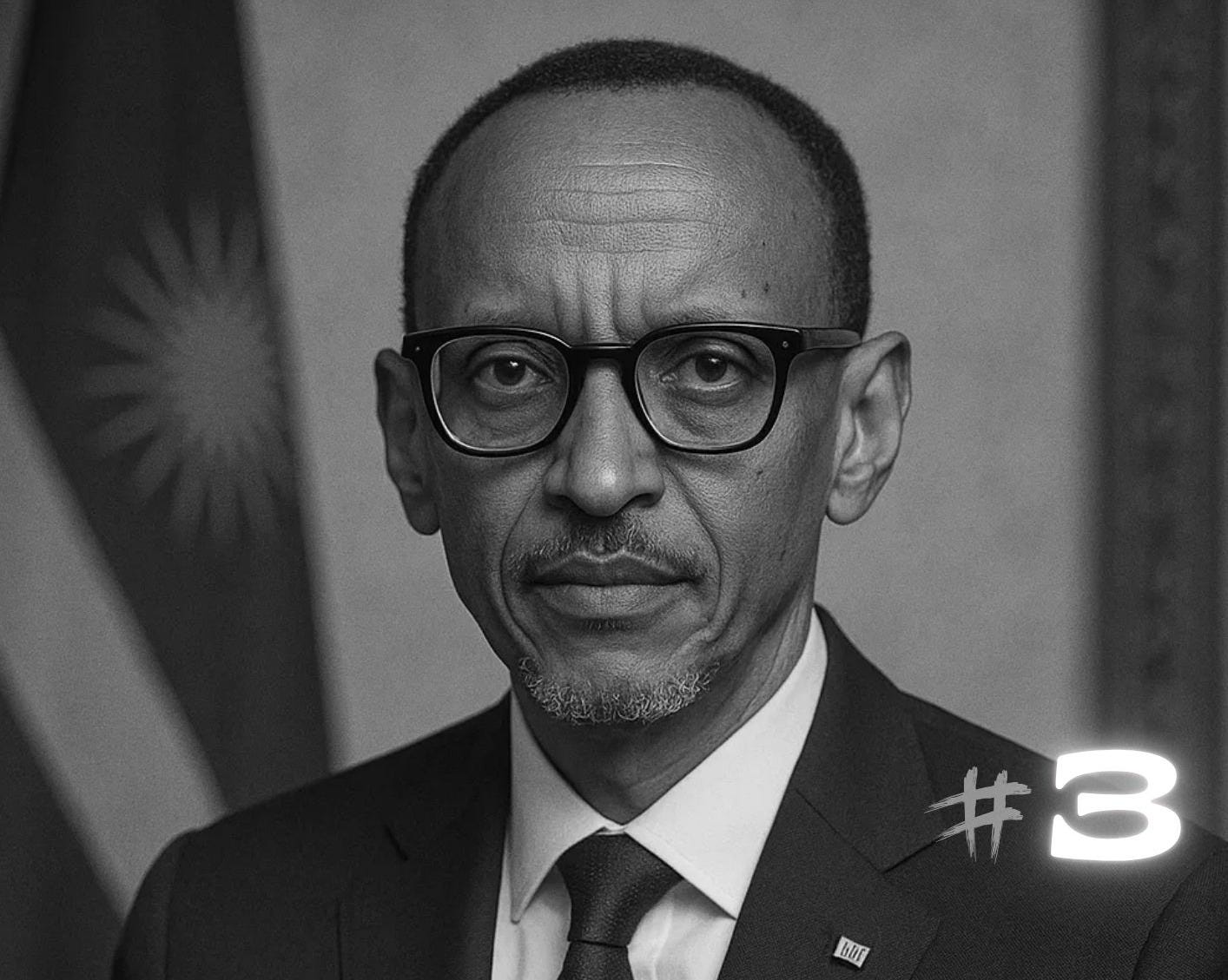
To access this, the whole series of 17 leadership reports and all wattyalan has to offer, join us for the journey!
Kwihangana n'Ubwiyunge -
Endurance and Renaissance
Rwanda's economic metamorphosis reflects Kagame's systematic approach to nation-building. Where traditional post-conflict leaders focus on reconstruction, Kagame envisioned wholesale reinvention. GDP per capita has soared from $125 in 2000 to nearly $1,000 today, an eightfold increase that defies conventional development trajectories.
The Vision 2050 strategy positions Rwanda to achieve $12,476 GDP per capita by mid-century, transforming the nation into a high-income economy. This ambitious target rests on sustained 7.4% average annual growth since 2000, consistently surpassing regional and global benchmarks. The World Bank's recognition of Rwanda as "one of the world's fastest-growing economies" validates this trajectory, while the IMF highlights the model as sustainable and inclusive.
Consider the transformation in concrete terms: poverty rates plummeted from 59% in 2001 to 38% by 2017, lifting millions from destitution. Universal healthcare coverage now reaches 91% of the population, compared to a mere 3.2% budget allocation in 1996. Life expectancy approaches 70 years, nearly double the post-genocide figure. These improvements stem from deliberate policy choices prioritizing human development alongside economic growth.
The economic diversification strategy demonstrates sophisticated understanding of vulnerability reduction. Agriculture's GDP share decreased from 42% in 2000 to 27.1% today, while services expanded to 44.3%. This rebalancing protects against climatic shocks while creating higher-value employment opportunities. Manufacturing growth, particularly in textiles and pharmaceuticals, positions Rwanda for regional export leadership within the African Continental Free Trade Area framework.
Digital Sovereignty as Continental Blueprint
Where other African nations debate technological advancement, Rwanda operates as the continent's living laboratory for the Fourth Industrial Revolution. 97% 4G coverage makes Rwanda the first African nation to achieve this milestone, while over 100 government services flow through the Irembo digital platform serving 9 million subscribers.
The $2 billion Kigali Innovation City represents more than infrastructure investment—it embodies continental technological sovereignty. This 61.9-hectare development will house world-class universities, research centers, and technology companies, generating 50,000 jobs while producing 2,600 tech graduates annually. Upon completion, the city will yield $150 million in ICT exports, cementing Rwanda's position as the "Digital Heart of Africa."
Kagame's Smart Rwanda Master Plan invested over $500 million across 67 priority projects, elevating ICT from 3% of GDP to becoming the second-largest contributor to economic growth in 2025. The Irembo platform exemplifies this transformation: subscribers experience 95% reduction in service delivery time, while 99% of government transactions occur electronically. Citizens can register businesses, pay taxes, and access healthcare services through their mobile phones, a level of digital integration that surpasses many developed nations.
Through the Rwanda Space Agency established in 2020, Kagame positions the nation within global space exploration frameworks. The RWASAT-1 satellite launched in 2019 provides agricultural monitoring capabilities, while Rwanda's request for 330,000 satellite slots indicates ambitious long-term planning for space-based services. The Artemis Accords signatory status demonstrates how small nations can claim stakes in humanity's cosmic future through strategic positioning rather than massive resource deployment.
These outcomes depend on centralized coordination authority and limited tolerance for policy dissent within implementation phases.
Ubwoba bw'Inzira -
Courage of the Path
Traditional African governance often emphasizes consensus over efficiency. Kagame inverted this paradigm through performance-based accountability where measurable outcomes drive policy decisions. His Imihigo performance contracts hold officials responsible for specific targets, while the Umuganda community service program engages citizens directly in national development.
Since 2007, Umuganda has generated over $127 million in development contributions, building schools, health centers, and infrastructure while fostering social cohesion across former ethnic divisions. This indigenous governance innovation demonstrates how traditional practices can evolve for modern challenges. Every last Saturday of the month, Rwandans participate in community work followed by discussions of local development priorities, connecting grassroots input to national policy implementation.
Gender equality achievements position Rwanda as a global leader: 64% women in parliament and 50% of cabinet positions held by women. The World Economic Forum ranks Rwanda 39th globally in gender equality, second in Africa. These outcomes reflect structural transformation rather than tokenism, maximizing human capital utilization for national development. Women's economic participation increased from 51% in 2000 to 86% in 2023, contributing directly to household income growth and poverty reduction.
Anti-corruption frameworks have positioned Rwanda among the top 5 least corrupt countries in Sub-Saharan Africa. 72% of Rwandans believe government effectively fights corruption, reflecting institutional credibility that enables long-term planning and sustained investment. The Rwanda Revenue Authority's automated systems and transparent procurement processes through the Umucyo e-procurement platform minimize opportunities for corruption while maximizing efficiency.
These mechanisms substitute procedural pluralism with performance discipline, prioritizing outcomes over deliberative redundancy.
Infrastructure as Foundation for Possibility
Kagame understood early that transformation requires foundational infrastructure supporting exponential growth. Energy sector achievements tell this story clearly: from 6% electrification in 2009 to 80% in 2024, Rwanda accomplished in fifteen years what many nations struggle to achieve in decades. $1.4 billion investment mobilized from development partners supports renewable energy prioritizing sustainability alongside accessibility.
The 18,846-kilometer road network with 40% paved roads connects every major town, while the 4,000-kilometer fiber optic backbone ensures digital connectivity reaches remote communities. The upcoming Bugesera International Airport with 8 million passenger capacity will establish Rwanda as East Africa's aviation hub, complementing the expansion of RwandAir into a continental carrier serving 29 destinations across Africa.
These developments represent interconnected elements of comprehensive strategy rather than isolated projects. The World Bank's $3.35 billion commitment across 25 projects demonstrates international confidence in Rwanda's implementation capacity while reflecting Kagame's ability to translate vision into measurable results. Infrastructure investment averaged 11% of GDP annually between 2010-2020, among the highest rates globally.
Water access exemplifies systematic progress: from 25% coverage in 1990 to 90% today, Rwanda achieved near-universal access through innovative financing mechanisms and community-based management systems. The One Cow per Poor Family program demonstrates integrated development thinking, combining livestock distribution with environmental restoration and poverty reduction in rural communities.
Ubwoba n'Ubwiyunge bw'Igihugu -
National Courage and Renaissance
Kagame's continental leadership extends far beyond Rwanda's borders. As African Union Chairperson from 2018-2019, he spearheaded comprehensive institutional reform strengthening the AU's capacity for continental projects. His leadership of the African Continental Free Trade Area signing in Kigali created the world's largest free trade area by country participation, covering 1.3 billion people and $3.4 trillion in GDP.
The AfCFTA implementation demonstrates Kagame's capacity to translate continental vision into practical frameworks. The agreement targets 52.3% increase in intra-African trade by 2030, while the Protocol on Free Movement promotes continental integration. Rwanda's visa-on-arrival policy for all African visitors exemplifies practical leadership transforming rhetoric into policy. This openness contributed to tourism revenue growth from negligible amounts in 2000 to $620 million in 2023.
His co-chairmanship of the UN Broadband Commission alongside Carlos Slim positions him as a global voice for digital development. The Commission's 100+ knowledge products and 70+ policy recommendations influence connectivity policies worldwide, establishing African leadership within global technology governance. Rwanda's hosting of major tech conferences, including Transform Africa summits, positions Kigali as a continental hub for digital policy discourse.
Environmental stewardship earned Kagame the UN Champions of the Earth Award in 2016. Rwanda's single-use plastic ban in 2008 preceded global environmental consciousness, while the Green Growth and Climate Resilience Strategy targets carbon neutrality by 2050. The Rwanda Green Fund has mobilized $247 million while creating 176,000 green jobs, proving environmental sustainability can drive economic opportunity. Forest cover increased from 18% in 1990 to 30% today through aggressive reforestation programs.
Economic Diversification Through Strategic Vision
Rwanda's transformation from agriculture-dependent economy to services-led growth reflects systematic economic planning. Services now contribute 44.3% of GDP, while agriculture's share decreased to 27.1%, healthy rebalancing reducing vulnerability to climatic shocks. The construction sector averaged 11% annual growth between 2015-2023, reflecting sustained infrastructure investment and urban development.
Tourism exemplifies diversification success: from negligible revenue in 2000 to $620 million in 2023, the sector became Rwanda's leading foreign exchange earner. Hotel room expansion from 623 in 2003 to 14,866 in 2018 demonstrates infrastructure development aligned with economic strategy. The partnership with Arsenal Football Club and brand Rwanda initiatives elevated international visibility, contributing to tourism growth alongside conservation success in mountain gorilla populations.
Foreign Direct Investment surged to $3.2 billion in registered commitments in 2024, representing 32.4% increase. The World Bank's Ease of Doing Business rankings consistently place Rwanda among top global performers—38th worldwide and 2nd in Africa. Business registration takes six hours online through the Rwanda Online platform, while property registration requires 12 days compared to regional averages exceeding 60 days.
Manufacturing shows particular promise with $1.35 billion in investment commitments representing 42.2% of total FDI in 2024. This reflects value-added industrialization creating jobs while building export capacity. Focus on textiles, pharmaceuticals, and electronics positions Rwanda for regional manufacturing leadership. The Made-in-Rwanda policy reserves government procurement for local products when quality and price remain competitive, stimulating domestic manufacturing.
Education and Health as Development Cornerstones
Kagame's approach to human development recognizes that sustainable progress requires investing in people. Universal health coverage serving over 90% of the population contrasts sharply with 3.2% budget allocation in 1996, representing structural transformation of health system financing. The Mutuelle de Santé community-based insurance system covers basic healthcare for all Rwandans, while performance-based financing rewards health facilities for achieving specific outcomes.
Health outcomes demonstrate systematic improvement: under-5 mortality fell from 163 per 1,000 in 1990 to 91 per 1,000 in 2010, while maternal mortality decreased by 75% since 1990. These improvements reflect institutional capacity for effective health service delivery. Rwanda eliminated malaria deaths in children under 5 by 2020, while HIV prevalence decreased from 3% in 2005 to 2.9% in 2023 through comprehensive prevention and treatment programs.
Education transformation shows similar systematic progress. Primary enrollment exceeds 100% gross enrollment ratio, while literacy rates increased from 38% in 1978 to 71% in 2009. University expansion from 1 in 1994 to 29 by 2010 demonstrates higher education development supporting knowledge economy goals. The competence-based curriculum introduced in 2015 emphasizes critical thinking and practical skills over rote memorization.
The strategic language policy shift from French to English as instruction medium reflects pragmatic alignment with the East African Community. This decision prioritizes regional integration over colonial legacy, demonstrating leadership that serves national interests above external expectations. English proficiency increased dramatically, facilitating business development and international education partnerships while maintaining Kinyarwanda as the national language for cultural preservation.
Financial Innovation and Digital Economic Leadership
Rwanda's fintech ecosystem exemplifies Kagame's vision for digital economic transformation. 60% mobile money penetration has dramatically increased financial inclusion. The Rwanda Fintech Strategy 2024-2029 targets 300 fintech companies and 7,500 new jobs through sector-specific planning. Mobile money transaction value of RWF 1,808 billion in 2018 represented approximately 25% of GDP, indicating deep financial system integration.
66% digital financial inclusion demonstrates how technology-enabled services can expand economic participation. The Virtual Card by MoMo partnership with Mastercard enables global e-commerce access, while the Rwanda Integrated Payments Processing System provides national payment infrastructure. These developments position Rwanda as a regional fintech hub with continental expansion potential.
The Central Bank's regulatory sandbox approach encourages financial innovation while maintaining stability. Cryptocurrency regulations adopted in 2023 position Rwanda among the first African nations to provide clear legal frameworks for digital assets. The Rwanda Stock Exchange's electronic trading platform facilitates capital market development, while the BNR's cashless payment initiatives reduced currency circulation costs while improving transaction security.
Ejo Hazaza h'u Rwanda n'Afurika -
The Future of Rwanda and Africa
Vision 2050 represents more than national planning, it provides a continental development model. Five strategic pillars emphasize human development, competitiveness, agricultural modernization, urbanization, and institutional strengthening. This comprehensive framework addresses structural transformation requirements systematically through specific targets: upper middle-income status by 2035 and high-income status by 2050.
The "unconventional thinking" approach acknowledges that "business-as-usual" remains insufficient for development objectives. This philosophy reflects intellectual honesty about development challenges while maintaining strategic optimism about solutions through measurable outcomes and specific performance indicators. The National Strategy for Transformation targets 65% urbanization by 2024, supported by secondary city development and rural settlement programs.
Environmental leadership demonstrates how green development can drive economic growth. The plastic bag ban in 2008 preceded global environmental consciousness, while the 38% emissions reduction target by 2030 shows climate leadership. The Green Growth and Climate Resilience Strategy aims for carbon neutrality by 2050, proving environmental protection can generate economic opportunities through climate finance mechanisms and carbon credit development.
Sovereignty-Results Framework in Practice
Kagame's leadership exemplifies the sovereignty-results framework through systematic implementation of nationally-determined priorities. His rejection of dependency on external validation enables innovative policy solutions rooted in Rwandan values and practical effectiveness. The Agaciro philosophy emphasizes dignity and self-determination as development foundations, contrasting with aid-dependent models that prioritize external approval over national ownership.
Performance-based governance ensures measurable outcomes drive policy decisions through Imihigo performance contracts creating accountability mechanisms that translate vision into results. Cabinet ministers sign annual performance contracts with specific targets, while district mayors implement similar systems at local levels. This accountability culture permeates government operations, creating institutional pressure for delivery.
His sustained popularity, approval ratings consistently above 90% in credible polls, reflects genuine domestic legitimacy built on tangible improvements in citizens' daily lives. The 2024 electoral mandate with over 99% support and 98% turnout, verified by international observers, demonstrates authentic democratic endorsement of his transformational agenda. The Rwanda Patriotic Front's electoral dominance stems from consistent delivery rather than manipulation, distinguishing it from many single-party systems globally.
Continental Architecture and Global Recognition
Beyond Rwanda's borders, Kagame's influence reshapes continental possibilities. The Smart Africa Initiative promotes continental digital integration through policy harmonization. The Transform Africa Summit serves as the regional platform for ICT development, while the single digital market vision drives collaborative frameworks across participating countries.
His East African Community leadership during 2018-2021 coincided with significant integration progress, including infrastructure development and trade facilitation improvements. The AfCFTA creates practical frameworks for continental trade through tariff elimination on 90% of goods and the Pan-African Payment and Settlement System facilitating cross-border transactions.
Kagame's global recognition extends beyond development circles. Time Magazine's inclusion among the world's 100 most influential people, the Global Goalkeeper Award from the Gates Foundation, and the Commonwealth Chairmanship demonstrate international acknowledgment of his leadership model. These accolades reflect measurable achievements rather than symbolic recognition.
Ubwiyunge bw'Igihugu Cyacu
Our Nation's Renaissance
Rwanda's positioning as Africa's innovation laboratory under Kagame's leadership represents continental possibility. Digital transformation, infrastructure development, and human capital investments create replicable models for African development that transcend colonial legacies and dependency relationships.
As Kagame leads Rwanda toward Vision 2050, his legacy extends beyond national transformation to continental inspiration. The sovereignty-results framework he embodies offers African nations a practical pathway from post-colonial dependency to 21st-century leadership through dignity, measurable results, and visionary planning.
The African century begins not with external validation or international approval, but with African leaders like Paul Kagame who understand that transformational change requires systematic implementation of ambitious vision. In Rwanda's laboratories and innovation centers, in its fiber optic networks and digital platforms, the future of Africa takes concrete form today.
From the ashes of tragedy, Kagame has architected a nation that proves African renaissance possible through disciplined governance, strategic vision, and unwavering commitment to measurable progress. This represents transformational leadership in its purest form, creating what never existed while inspiring a continent to embrace its unlimited potential.
Ubwiyunge bw'u Rwanda ni ubwiyunge bw'Afurika yose -
Rwanda's renaissance is Africa's renaissance.
I find these reports fascinating. I get something new every time I read them again as there's so much to take in. Looking forward to finding out who else passed your bench mark.. when does the next report get released please? Are you part of an organisation or an ambassador for a country.
This was such an inspiring read which led me to look closer at what's happening now in Rwanda and found this article: https://www.ktpress.rw/2025/07/find-the-giant-within-kagame-and-the-giants-of-africa-festival-urge-africas-youth/ which I was heartened to read and see such a rich collection of countries of Africa come together..... here..... https://www.flickr.com/photos/kigali-today/albums/72177720327864362/with/54682966801
Well done WattyAlan x