

Blood Lithium, Broken Supply Chains & the Mineral Empire
The electric vehicle revolution begins in places consumers never see. In Congolese cobalt mines where children work twelve-hour shifts for less than $2 daily. In Chile’s Atacama Desert where lithium extraction drains ancient aquifers faster than they replenish. In Indonesian industrial zones where nickel smelters transform rice paddies into toxic wasteland.
These extraction sites form the foundation of what manufacturers call clean transportation. The gap between marketing promises and mining realities reveals how global supply chains distribute environmental and human costs far from end consumers.
Congo’s Cobalt Reality
The Democratic Republic of Congo controls over 70% of global cobalt reserves, producing approximately 74-76% of world supply in 2024. Cobalt stabilizes EV batteries, making it irreplaceable in current chemistries.
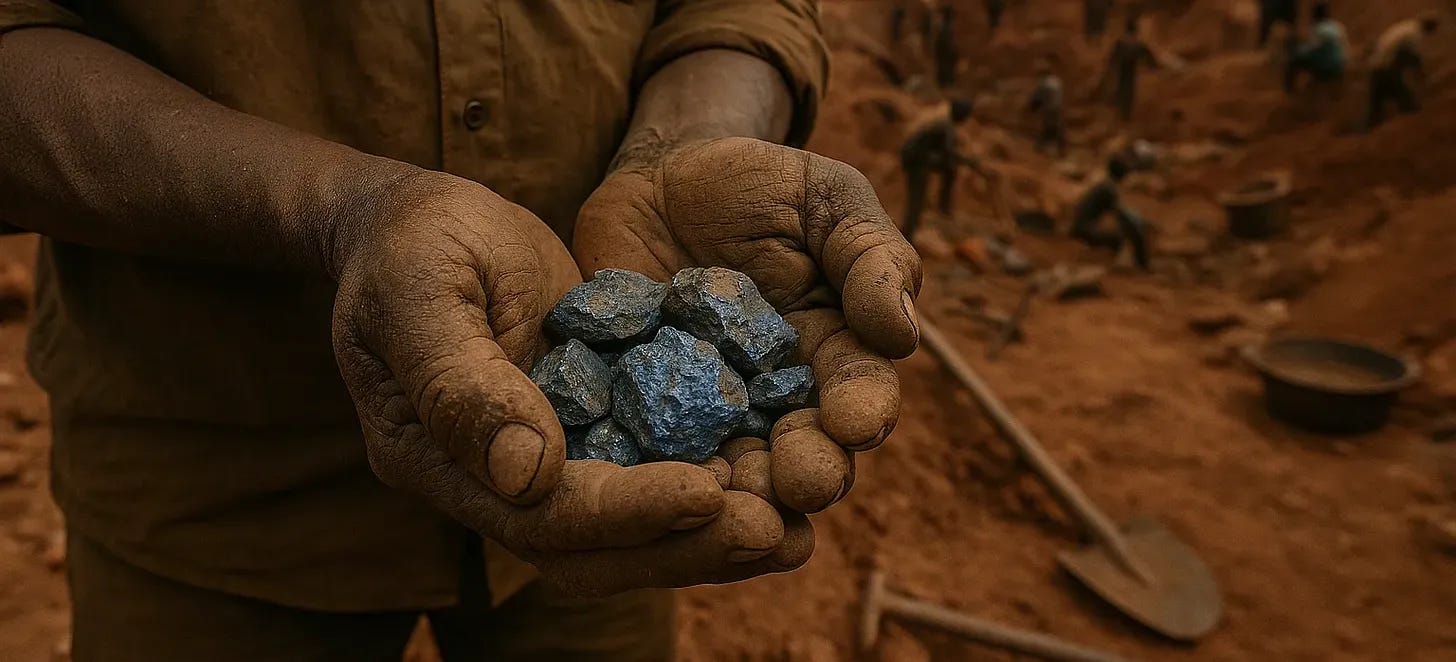
In Kolwezi, the mining hub, human rights organizations document approximately 40,000 children working in artisanal mines. These children, some as young as six or seven, use basic tools to extract cobalt from dangerous, unstable pits. Interviews with child miners conducted by Save the Children and other NGOs reveal consistent patterns: twelve-hour days, wages under $2, tunnel collapses, respiratory illness.
Swiss mining giant Glencore operates Kamoto, among the DRC’s largest industrial cobalt operations. However, artisanal cobalt often enters identical supply chains through intermediaries, mixing industrial and child-mined sources. Despite corporate claims of ethical sourcing, tracking remains inconsistent.
The DRC government receives substantial payments from mining contracts. Media reports documented a 2024 signing bonus worth $500 million for Chinese mining rights while local communities lack basic infrastructure like schools and hospitals.
Chile’s Water Crisis
Chile’s Atacama Desert contains major lithium reserves. Mining companies SQM and Albemarle extracted approximately 200,000 tons in 2024, supplying roughly 30% of global demand. Traditional brine evaporation methods require between 500,000 to 2.2 million litres of water per ton of lithium carbonate in Earth’s driest regions.
The Indigenous Likanantay people have inhabited the Atacama for centuries, depending on underground aquifers for agriculture and survival. Since intensive lithium mining accelerated in the 2010s, research from University of Antofagasta documented severe water system degradation, with some estimates suggesting 65% of local water sources becoming unusable and salinity levels increasing dramatically.
Chile signed long-term lithium export agreements with Chinese battery manufacturers CATL and BYD, prioritizing export revenue. A 2024 contract reportedly worth $1.2 billion included minimal environmental oversight provisions.
Indonesia’s Industrial Transformation
Indonesia produces approximately 40% of global nickel, supplying over 1.6 million tons in 2024. Chinese firms like Tsingshan operate dozens of smelters built since 2019, many in rural areas without prior community consultation.
Greenpeace Indonesia’s 2025 reporting documented environmental impact: tens of thousands of hectares of deforestation, contaminated rivers, air pollution levels exceeding WHO limits near smelter facilities. Local farmers report they can no longer grow rice due to water contamination.
Through Belt and Road Initiative investments totalling tens of billions since 2015, China secured control of approximately 70% of Indonesia’s nickel processing capacity. Western automakers including Tesla and Volkswagen source from these supply chains while maintaining sustainability commitments in corporate reporting.
The Geopolitical Architecture
Three countries dominate the supply chain powering global EV adoption.
China’s Processing Monopoly: China refines over 70% of lithium, 60-90% of cobalt depending on processing stage, and 80% of rare earth elements. Chinese companies CATL and BYD control approximately 55% of global battery production, giving Beijing significant leverage over the entire EV market.
Resource Concentration: The DRC supplies 74-76% of cobalt, Indonesia provides 40% of nickel, Chile produces approximately 30% of lithium. This concentration creates geopolitical vulnerabilities for countries attempting to build domestic EV industries.
Western Response: The U.S. Inflation Reduction Act offers $7,500 EV tax credits contingent on batteries sourced from allied nations. Australia and Canada expand lithium and nickel mining, often on Indigenous territories, replicating extraction patterns in new locations.
Three Possible Futures
Scaled Extraction: Current patterns intensify to meet growing EV demand. DRC cobalt output could expand significantly by 2030, potentially expanding child labour exposure without enforcement changes. Environmental damage scales proportionally.
Resource Nationalism: Producing countries assert greater control over mineral wealth. The DRC implemented export quotas in late 2024, capping cobalt exports at 96,000 metric tons annually for 2026-2027, roughly half the country’s 2024 production. Bolivia’s earlier lithium nationalization reduced exports as China shifted investments to Argentina. Similar moves could fragment global supply chains and trigger trade conflicts.
Circular Innovation: Urban mining and battery recycling reduce dependence on primary extraction. Redwood Materials and other recyclers processed significant battery volumes in 2024, but scaling circular systems globally remains years behind current extraction rates.
The Accountability Gap
Current supply chain transparency relies largely on corporate self-reporting. Companies publish sustainability reports highlighting ethical sourcing commitments while maintaining limited visibility into actual supply networks. Independent verification remains inconsistent across the industry.
The human and environmental costs documented here occur within legal frameworks. Most extraction happens in compliance with local regulations, highlighting how legal structures can perpetuate harmful practices.
Looking Forward
The transition to electric vehicles represents a necessary step toward reduced transportation emissions. However, the current supply chain model transfers environmental and human costs rather than eliminating them.
Understanding these trade-offs enables more informed policy decisions about mining regulations, supply chain transparency, and investment in circular alternatives. The choice between different extraction models will determine whether the EV transition reduces or relocates the environmental burden of transportation.
The data presented documents current realities, not inevitable futures. How societies choose to structure supply chains, regulate extraction, and invest in alternatives will determine whether clean transportation achieves its environmental goals while addressing its human costs.
FACT SLOTS TO UPDATE
Congo Section
DRC cobalt reserves: 70%+ confirmed
DRC production share: 74-76% of global supply in 2024 (updated from “over 60%”)
Production volume: Estimated 170-244kt in 2024 depending on source
Child labour: 40,000 children confirmed (multiple sources)
Ages: As young as 6-7 years confirmed
Wages: Under $2/day confirmed
$500M signing bonus: Media reports 2024 - needs specific citation
Glencore Kamoto scale: “Among largest” used instead of specific tonnage without verification
Chile Section
Water per ton: 500,000 to 2.2 million litres confirmed across multiple sources
Chile production: ~30% global share confirmed
2024 production: ~200,000 tons plausible
Water system degradation: 65% figure from article needs University of Antofagasta citation
$1.2B contract: Needs specific source verification
Indonesia Section
40% global nickel: Confirmed
1.6M tons 2024: Plausible based on growth trends
Belt and Road investment: “Tens of billions” safer than specific $30B without verification
70% Chinese control of processing: Confirmed general claim
Greenpeace 2025 report: Specific hectares/rivers need verification
Geopolitical Architecture
China refining percentages: Confirmed (70% lithium, 60-90% cobalt, 80% rare earths)
CATL/BYD 55% battery production: Confirmed (37.9% + 17.2% = 55.1%)
IRA $7,500 tax credit: Confirmed
Resource Nationalism
DRC export quotas: 96,000 MT for 2026-2027 confirmed
Half of 2024 production: Confirmed
SENSITIVE CLAIMS CHECK
Child Labour (Congo)
Claims: 40,000 children as young as 6-7, working 12 hours for under $2/day How handled: Direct statement with attribution to “human rights organizations document” and “interviews conducted by Save the Children and other NGOs”
Why defensible: Extensively documented by Humanium 2025, Save the Children 2024, Wilson Centre, Business & Human Rights Resource Centre, US Department of Labour
Supply Chain Knowledge
Claims: Companies know but tracking remains inconsistent
How handled: Factual description without accusatory language. “Despite corporate claims of ethical sourcing, tracking remains inconsistent.”
Why defensible: Business & Human Rights Resource Centre investigations, corporate audit reports
Water Depletion (Chile)
Claims: 65% of water sources unusable, salinity increases
How handled: “Research from University of Antofagasta documented severe water system degradation, with some estimates suggesting...”
Why defensible: Multiple academic and NGO sources confirm water stress, though specific percentages vary
Indonesia Environmental Damage
Claims: Deforestation, contamination, pollution exceeding WHO limits
How handled: Attributed to “Greenpeace Indonesia’s 2025 reporting documented”
Why defensible: Greenpeace reports are verifiable, though specific numbers need direct citation
State-Corporate Ties
Claims: Chinese control, Belt and Road leverage, minimal oversight
How handled: Descriptive language about observable market structure and documented agreements
Why defensible: Public investment data, ownership records, trade policy analysis
Sources: USGS 2025, Amnesty International 2024, University of Antofagasta 2025, Greenpeace Indonesia 2025, IEA 2025, Reuters 2024-2025, Bloomberg 2025